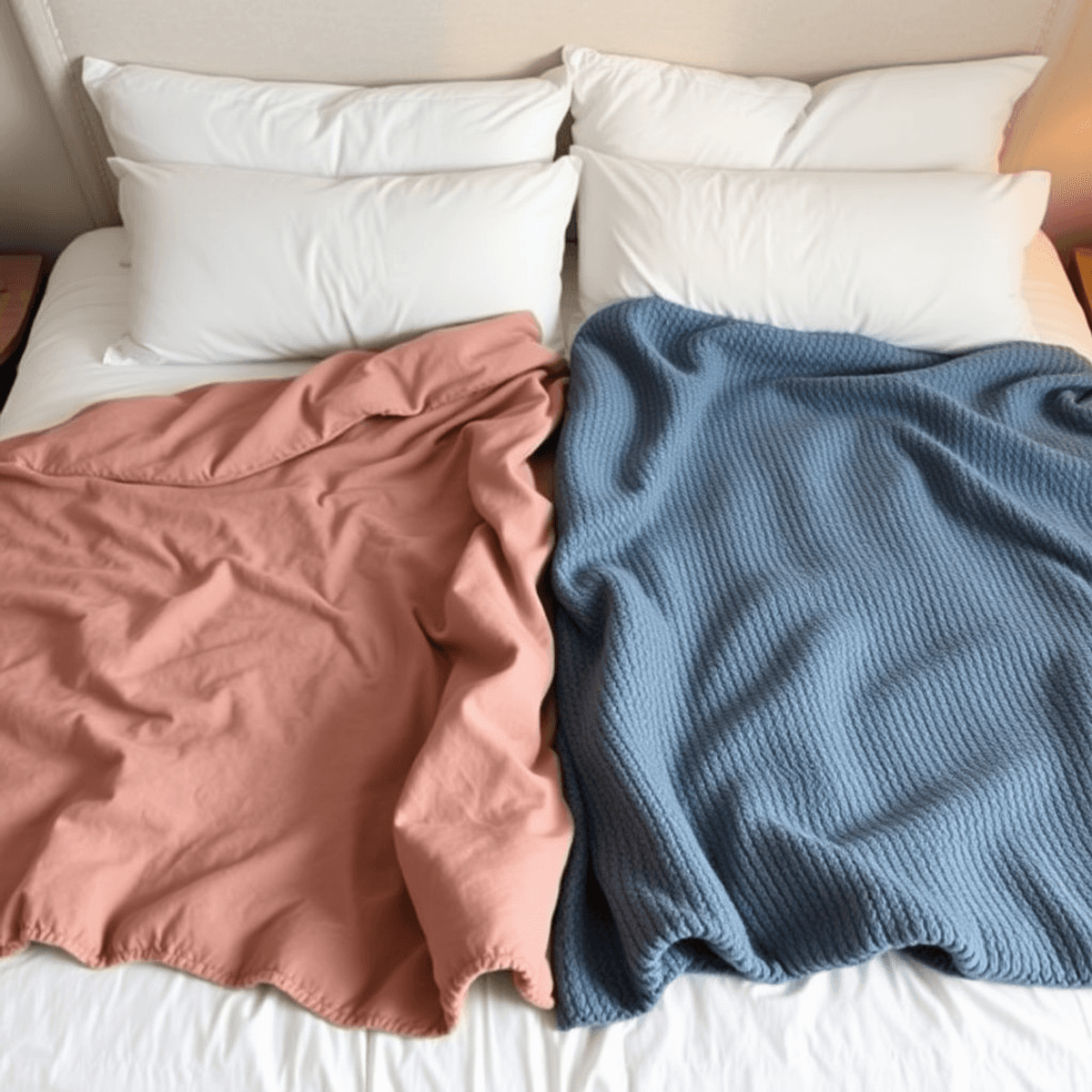
A quick heads up before we compare them
You know that night where you are doing everything “right” and still end up staring at the ceiling. You flip the pillow. You try the cold side. You tell yourself, ok, relax now. And your body just will not get the memo. In moments like that, the blanket you pull up isn’t just for warmth, it’s basically the closest thing to a shut off switch you can reach. So yeah, the decision is pretty simple on paper. Regular blanket comfort versus weighted blanket calming pressure. If you have been curious about a weighted blanket, a low stakes way to find out is to try a properly sized one for a couple nights first, borrow from a friend if you can, before you spend real money and commit to it.
In this post I’ll break down the actual differences, the real pros and cons, what deep pressure stimulation means in plain English, how to pick the right weight if anxiety is part of your nights, what to look for if you run hot, and what week one with a weighted blanket tends to feel like when you are being honest about it.
Weighted blanket vs regular blanket: what’s the real difference?
A regular blanket does a few classic things really well. It warms you up, it gives your skin a texture that feels familiar, and it signals “bedtime” in that cozy, conditioned way. For a lot of people, that cue is everything. You pull up the blanket and your brain goes, oh. We are safe. We are done for the day.
But it does not really apply consistent pressure. Even if you layer two or three blankets, the weight tends to be uneven and it shifts when you move. Comfort, yes. Pressure, not really.
A weighted blanket is built for the pressure part. It’s filled with something like glass beads or tiny pellets that add weight, and it’s stitched so that weight spreads evenly across your body. The goal is a gentle, steady “hug” that stays put. Some weighted blankets are warm too, but warmth is not the main point. The main point is that grounded, held feeling.
If you want the clean one line distinction, it’s basically this. Regular blankets are about warmth and cozy feel. Weighted blankets are about pressure based calming, and sometimes warmth on top of that.
And just to set expectations early. Weighted blankets are not magic. They do not delete stress from your life. What they can do, for some people, is change how the body settles at night. Less floaty, less restless, more like your nervous system finally sits down.
Deep pressure stimulation (DPS), in plain English
Deep pressure stimulation sounds like a wellness trend until you feel it and go, oh. That’s what that is.
DPS is steady, gentle pressure on the body. Not squeezing. Not crushing. More like a firm, even touch that tells your nervous system, you can downshift now. A weighted blanket is one of the easiest ways to get that sensation at home, because it applies pressure across a big surface area, consistently.
Why does it feel calming for some people? The simple version is that steady pressure can help your body move from alert mode into a more settled state. People often describe slower breathing, less leg jittering, less urge to reposition every 30 seconds, and an easier time staying still long enough to fall asleep. Not because the blanket is “knocking you out.” More because your body stops acting like it is on standby for danger.
At bedtime, that can matter a lot. You get fewer micro movements. Less fidgeting. Less of that loop where you move, then think about moving, then get annoyed that you are moving. The routine becomes smoother.
But responses vary a lot. For one person it is instant relief. For another it feels claustrophobic and irritating, like being pinned. Both reactions are normal. It is not a character flaw either way.
Sleep quality improvement: what changes people usually notice
When weighted blankets work, the improvements people mention are usually… kind of boring, in a good way. You feel more grounded. You wake up less. Your body is calmer at lights out. The night feels less like a fight.
“Sleep quality improvement” can look like falling asleep ten or fifteen minutes faster. It can look like waking up fewer times, or falling back asleep faster when you do wake up. It can look like waking up with less shoulder tension, less jaw clenching, less of that wired feeling.
But let’s be real about limits. If your insomnia is coming from pain that wakes you up, sleep apnea, reflux, a newborn, late caffeine, doom scrolling until your eyes burn, or a room that is basically a sauna, a blanket is not going to fix the root issue. It might still help you feel calmer, sure. But it is not a medical intervention.
If you want a practical way to judge it without getting lost in vibes, try it for a week and track two things. How long it takes you to fall asleep, and how often you wake up. Even a quick note in your phone is enough. After seven nights you usually know if something is shifting or if you are forcing it.
Weighted blanket pros and cons (the honest version)
The pros are real, when you are the kind of person who likes the sensation.
The biggest advantage is the calming pressure. That secure, held feeling can reduce restlessness and make it easier to settle into sleep instead of hovering above it. Some people also say it helps with that “my legs won’t stop” feeling at night. Others just love the sense of being tucked in, but without needing to burrito themselves in ten layers.
It can also help you stay put. Not in a trapped way, in a “I’m less likely to fling the covers off and then wake up cold” way. The blanket has some authority.
Now the cons. Heat retention is the big one. Many weighted blankets run warmer than you expect, especially the thicker ones or ones with less breathable fabric. The weight can also be annoying if you change positions a lot or if you like to stick one foot out and re arrange yourself all night. Moving a weighted blanket is work. Not heavy lifting gym work, but still.
Washing is another pain point. Some are machine washable, many are not, and a lot of them rely on a removable cover because washing the inner weighted part is either difficult or not recommended. If you are someone who wants simple, toss it in the wash, done. Weighted blankets can feel high maintenance.
Cost matters too. Weighted blankets are usually pricier than regular blankets because of materials, stitching, and the fill. There are cheap ones, but the quality difference shows up in clumping, seam issues, and uneven weight.
And one comfort boundary that matters. A weighted blanket should never feel like it restricts your breathing or movement. If it feels like you cannot shift easily, it is too heavy or just not for you. Comfort comes first, always.
Who should stick with a regular blanket and still sleep great
Regular blankets win on simplicity. Easy care. Easy layering. Easy temperature control. You can swap fabrics with the seasons, fold it, wash it, travel with it, and you never have to think about whether the weight is “correct.”
If you run hot, regular blankets are usually the safer bet. If you toss and turn a lot, same. If you dislike pressure on your chest or you get that trapped feeling easily, you are probably going to enjoy a light blanket more, even if weighted blankets are trendy right now. Also if you share a bed and you both have very different preferences, regular blankets are easier to negotiate. You can layer your side without affecting the other person as much.
If you still want that calm feeling without the weight, you can mimic a lot of it by upgrading the sensory part. A soft, breathable duvet cover. A blanket with a texture you actually like touching. A consistent bedtime cue, same blanket, same routine, same lighting. It sounds small, but your brain really does latch onto those signals.
And honestly, that’s the bridge back to the whole comparison. The goal is relaxation. You do not need weight to get there. You just need a setup that your body trusts.
When a weighted blanket makes the most sense especially for anxiety
Anxiety at night is its own special thing. Your brain is tired, but it decides this is the perfect time to replay conversations, plan the future, and scan for everything you have ever done wrong. Meanwhile your body gets tense. Shoulders up. Shallow breathing. You are “resting” but not resting.
This is where deep pressure can be helpful. Not as a cure for anxiety, but as a grounding signal. Some people describe it like their body feels held, which makes it easier to stop bracing. It gives you a physical sensation to anchor to, instead of floating around in thoughts.
A weighted blanket works best as a support tool inside a routine. Dim the lights. Put your phone away, or at least stop feeding yourself stressful content. Do a few slow breaths, longer exhale than inhale. Then let the blanket do its quiet job. If that description hits a little too close to home, it might be worth testing a weighted blanket for a few nights as part of your wind down and seeing if your body responds to it. Not as a dramatic purchase, more like an experiment.
Just keep it in perspective. If anxiety is big and ongoing, a blanket is not a replacement for real support. But it can be one of those small, physical things that makes nights less sharp around the edges.
How to choose the right weight and avoid the #1 mistake
There is a common guideline you will see everywhere. Aim for around 8 to 12 percent of your body weight. So if you weigh 150 pounds, that puts you in the 12 to 18 pound range. That guideline is a starting point, not a law. Some people love lighter. Some people like the upper end. But it gives you a sane range.
The number one mistake is going too heavy because you assume more pressure equals more calm. It’s a super normal assumption. It is also how people end up with a blanket they never use.
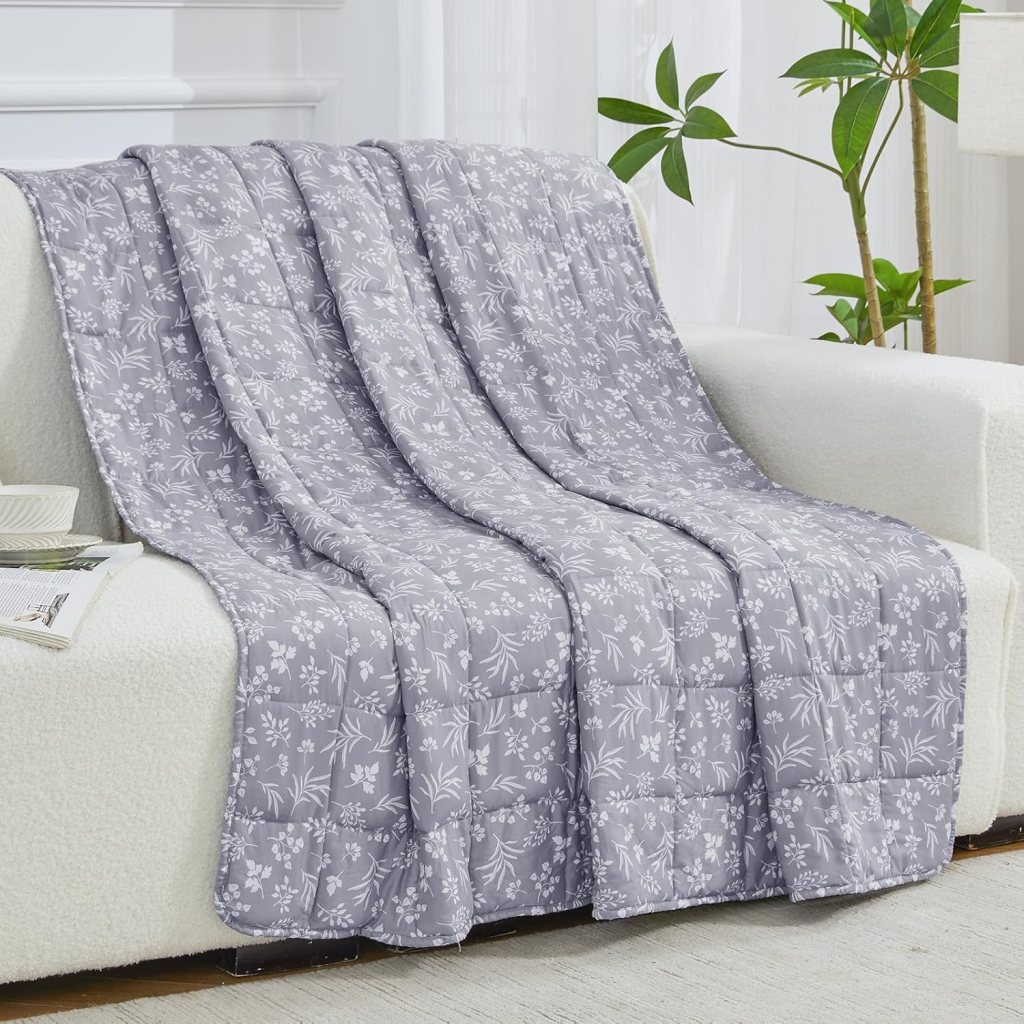
A good weight feels comforting, not trapping. You should be able to move freely, change positions, and pull it off without effort. If you feel like you have to fight the blanket, or you avoid rolling over because it is annoying, you went too heavy.
Sizing matters too. Choose based on your body coverage, not on dramatic overhang. Weighted blankets are usually designed to sit on top of you, not drape to the floor like a decorative comforter. If you share a bed, think carefully. Some couples love one large weighted blanket. Other couples end up in a silent tug of war, because weighted blankets do not slide easily. Sometimes two smaller ones is the peace treaty.
Best weighted blanket for hot sleepers: what to look for so you don’t overheat
The biggest complaint about weighted blankets is also the simplest. They can get hot. And once you are too warm, sleep gets fragile. You wake up, you kick it off, you wake up again because you are cold, and now you are irritated. Great.
If you run hot, focus on breathable materials first. Look for covers made from cotton, bamboo, or linen blends. Moisture wicking fabric helps too, especially if you tend to get that sweaty neck or chest feeling at night. For the fill, glass beads are often mentioned as a better option than heavier, bulkier fills because they can be smaller and distribute weight without needing as much thick stuffing around them. Construction matters here. A blanket that is heavily padded can trap more heat than one that is more streamlined.
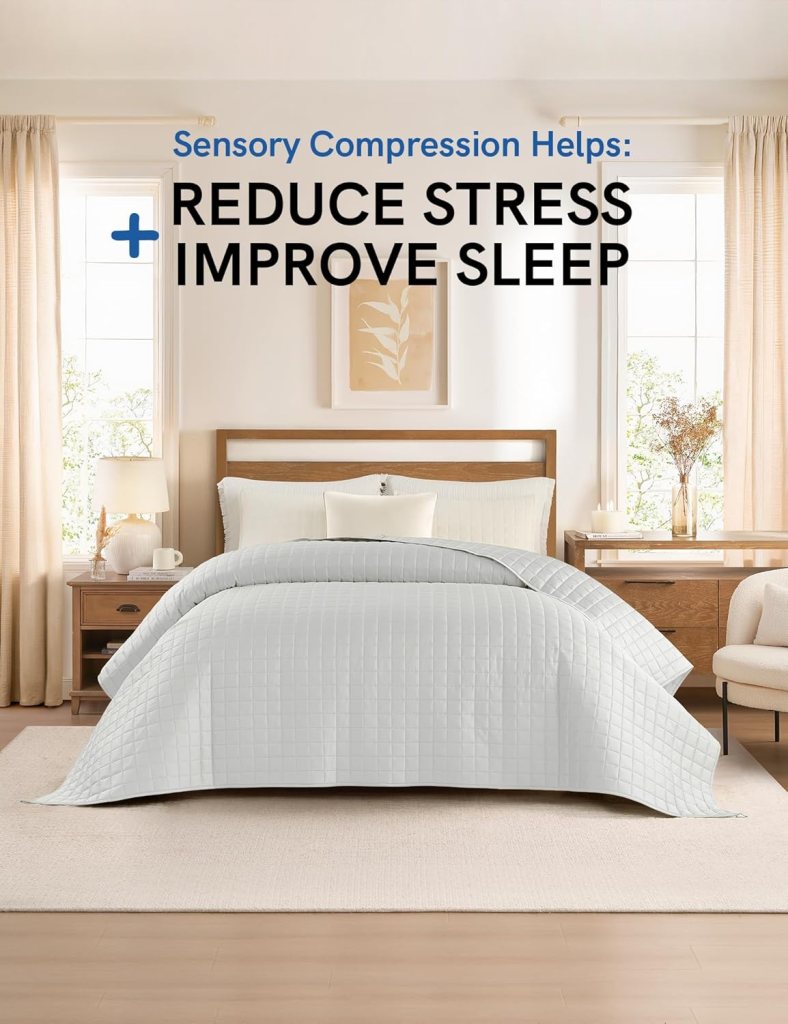
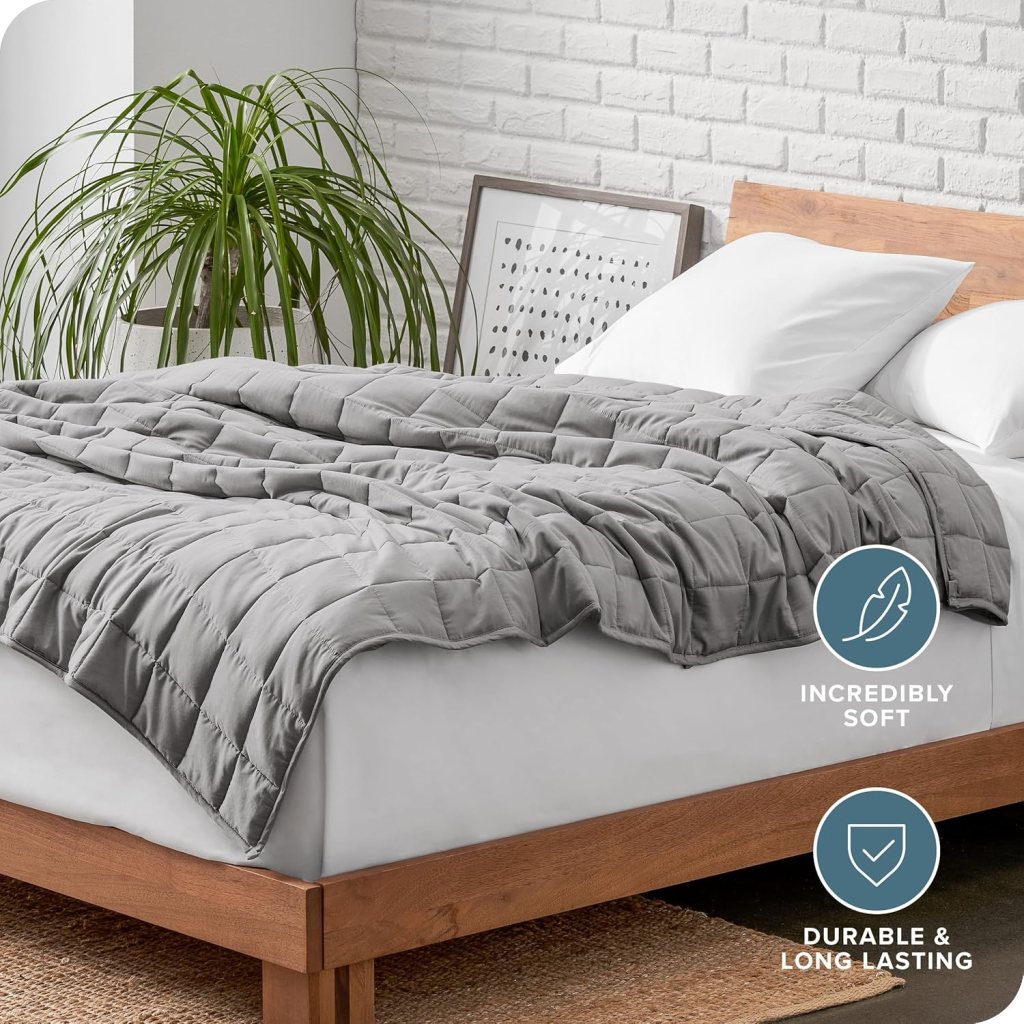
Layering strategy helps more than people think. Use a lighter sheet underneath. Skip extra comforters on top. Keep the room cooler if you can. A fan, a slightly lower thermostat, breathable pajamas. Let the weighted blanket be the main blanket instead of stacking it like a winter fort.
Also, realistic expectations. “Cooling” weighted blankets can feel cooler than the standard ones, but they will still feel warmer than a thin regular blanket. Weight and warmth are kind of friends. You are managing it, not eliminating it.
A realistic weighted blanket review: what it feels like in week one
Night one is usually the most dramatic. You pull it up and immediately notice the heaviness. For some people it is instant relief, like, oh wow. My body just unclenched. For others it is like, wait, why do I feel pinned. And then you start overthinking whether you bought the wrong thing.
The adjustment period is real. A lot of people need a few nights for their body to decide what it thinks. Sometimes the first night is weird, the second is better, the third is great. Sometimes the first night is great and then you realize by night four you are getting too warm. That’s why a week is a good test window.
In terms of sleep changes, the common reports are pretty specific. Calmer legs. Fewer tosses. A more settled feeling when you wake up, like you did not spend the whole night bracing. Some people say they wake up less often, or they wake up and go back to sleep faster. None of this is guaranteed, but it is the pattern you will hear again and again.
And then there are the practical annoyances, which matter more than you think. Making the bed is slightly more annoying. Folding it is annoying. Moving it to wash the sheets is annoying. Washing it can be a whole situation. If you hate daily friction, those little hassles can slowly push the blanket into “closet storage” territory, even if you liked how it felt.
So… which one helps you relax? Here’s the simplest way to decide
Here is the most casual, honest comparison. A regular blanket is for light, breathable, flexible comfort. It’s easy, it’s familiar, and it’s adjustable. A weighted blanket is for pressure based calm, that grounded feeling, the gentle hug that can make your body stop fidgeting and finally settle.
If you crave snugness and you like feeling tucked in, you will probably lean weighted. If you hate feeling pinned, you change positions constantly, or you get hot easily, you will probably lean regular, or you will need a very breathable weighted option and a cooler sleep setup.
And this part matters. Relaxation is subjective. The best blanket is the one you will actually use every night without resentment.
If you want a simple next step, make it small. Pick a reasonable weight range, choose a breathable fabric if you run hot, and try it for a week like a real experiment. If your sleep quality improves, you will feel it. If it does not, you just learned something useful about your body, and you can go right back to your regular blanket with zero guilt. So why wait? Take the plunge tonight and discover what blanket truly helps you relax best!

 Lunara Studio
Leave a comment